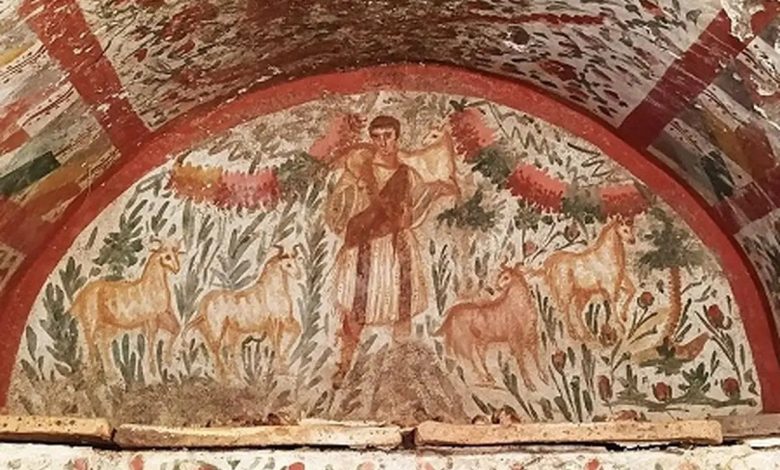
سالمترین تصویر عیسی مسیح در مقبره قرن سوم کشف شد
باستان شناسان نقاشیهای دیواری را در داخل یک مقبره قرن سوم که یک تصویر کمیاب از عیسی مسیح به عنوان «شبان نیکو»است را در ایزنیک ترکیه کشف کردند. این نقاشی دیواری از دوره روم باستان به گفته باستانشناسان، سالمترین نمونه شناخته شده از این نقشمایه است.
به گزارش راوی کار، نقاشی «شبان نیکو» که تصویری از عیسی مسیح با چهرهای جوان است توسط تیمی از باستانشناسان ترکیه کشف شد. بر اساس بررسیهای علمی، این نقاشی نهتنها سالمترین نمونه شناختهشده از این نقشمایه است که یکی از مهمترین یافتههای مربوط به دوران آغازین مسیحیت در آناتولی به شمار میآید.
در این اثر، تصویری از عیسی مسیح با چهرهای جوان، بدون ریش و با پوششی شبیه به توگاهای رومی دیده میشود که بزی را بر دوش خود حمل میکند؛ تصویری که او را در قالب «شبان نیکو» نشان میدهد. پژوهشگران میگویند این از معدود نمونههایی در آناتولی است که در آن، عیسی مسیح با ویژگیهایی آشکارا رومی به تصویر کشیده شده است.
بر اساس گزارش یورونیوز، این نقاشی در ماه اوت، درون آرامگاهی زیرزمینی در نزدیکی ایزنیک کشف شد؛ شهری که بهتازگی پاپ لئو چهاردهم در نخستین سفر خارجی خود از آن بازدید کرد. ایزنیک در تاریخ مسیحیت جایگاهی ویژه دارد، چرا که شورای نیقیه در سال ۳۲۵ میلادی در این شهر برگزار شد و «اعتقادنامه نیقیه» در همانجا به تصویب رسید.
به باور باستانشناسان، این آرامگاه که در روستای هیساردره قرار دارد، به قرن سوم میلادی تعلق دارد؛ دورهای که مسیحیان همچنان در امپراتوری روم با آزار و سرکوب گسترده روبهرو بودند.
پیش از آنکه صلیب به عنوان نماد فراگیر مسیحیت رواج یابد، تصویر «شبان نیکو» نقشی اساسی در بیان ایمان مسیحی داشت و مفاهیمی چون حمایت، رستگاری و هدایت الهی را بازتاب میداد. با این حال، تنها شمار اندکی از نمونههای این نقشمایه در آناتولی کشف شده و نمونه هیساردره از نظر میزان سالمماندن، بینظیر توصیف میشود.
گولشن کوتبای، سرپرست تیم باستانشناسی میگوید این اثر «احتمالا تنها نمونه از این نوع در منطقه» باشد.
دیوارها و سقف آرامگاه کوچک و تنگ نیز با نقشهایی از پرندگان و گیاهان تزئین شده و تصاویر مردان و زنان اشرافی، در کنار خدمتکاران برده، بر دیوارها دیده میشود.
ارن ارتن ارتم، باستانشناس موزه ایزنیک، میگوید این نقاشیها «گذار از اواخر دوره چندخدایی به مسیحیت اولیه را نشان میدهد و در آن، بدرقه متوفی به جهان پس از مرگ به شکلی مثبت و شایسته به تصویر کشیده شده است».
در جریان کاوشها، اسکلت پنج نفر نیز کشف شده که هویت سه تن از آنها مشخص شده است؛ دو جوان و یک نوزاد ششماهه.
گفتنی است، آناتولی صحنه رویدادهای سرنوشتسازی در تاریخ مسیحیت بوده است؛ پولس قدیس در شهر طرسوس به دنیا آمد، یوحنا قدیس سالهای پایانی عمر خود را در افسوس گذراند و بنا بر برخی روایتها، مریم باکره نیز آخرین روزهای زندگی خود را در نزدیکی همین شهر سپری کرده است.
The most intact image of Jesus Christ discovered in a 3rd century tomb
Archaeologists have discovered a rare depiction of Jesus Christ as the “Good Shepherd” inside a 3rd century tomb in Iznik, Turkey. The mural from the ancient Roman period is the most intact known example of this motif, according to archaeologists.
According to Ravi Kar, the “Good Shepherd” painting, which depicts Jesus Christ with a youthful face, was discovered by a team of Turkish archaeologists. According to scientific studies, this painting is not only the most intact known example of this motif, but is also one of the most important findings related to the early period of Christianity in Anatolia.
In this work, an image of Jesus Christ with a youthful face, without a beard and wearing a garment similar to a Roman toga, is seen carrying a goat on his shoulders; an image that shows him in the form of the “Good Shepherd”. Researchers say it is one of the few examples in Anatolia that depicts Jesus with distinctly Roman features.
The painting was discovered in August in a subterranean tomb near Iznik, a city recently visited by Pope Leo XIV on his first foreign trip, according to Euronews. Iznik holds a special place in Christian history, as the Council of Nicaea was held there in 325 AD, where the Nicene Creed was adopted.
Archaeologists believe the tomb, located in the village of Hisarde, dates back to the third century AD, a period when Christians were still facing widespread persecution and oppression in the Roman Empire.
Before the cross became the universal symbol of Christianity, the image of the “Good Shepherd” played a central role in expressing the Christian faith, reflecting concepts such as protection, salvation and divine guidance. However, only a few examples of this motif have been discovered in Anatolia, and the Hisardere example is described as unique in its level of preservation.
The work is “probably the only example of its kind in the region,” says Gulsen Kotbay, the head of the archaeological team.
The walls and ceiling of the small, narrow tomb are also decorated with patterns of birds and plants, and images of aristocratic men and women can be seen on the walls, alongside slave servants.
Eren Erten Ertem, an archaeologist at the Iznik Museum, says the paintings “mark the transition from the late polytheistic period to early Christianity, and in them the escort of the deceased to the afterlife is depicted in a positive and dignified way.”
The excavations also uncovered the skeletons of five people, three of whom have been identified: two young men and a six-month-old baby.
It is worth noting that Anatolia has been the scene of fateful events in the history of Christianity; Saint Paul was born in the city of Tarsus, Saint John spent the final years of his life in Ephesus, and according to some accounts, the Virgin Mary also spent the last days of her life near this city